Raz
Desserts and Sweets
Suji Ka Halwa recipe
Suji ka halwa is a warm semolina pudding cooked in ghee, served at breakfast, after meals and on festive mornings.
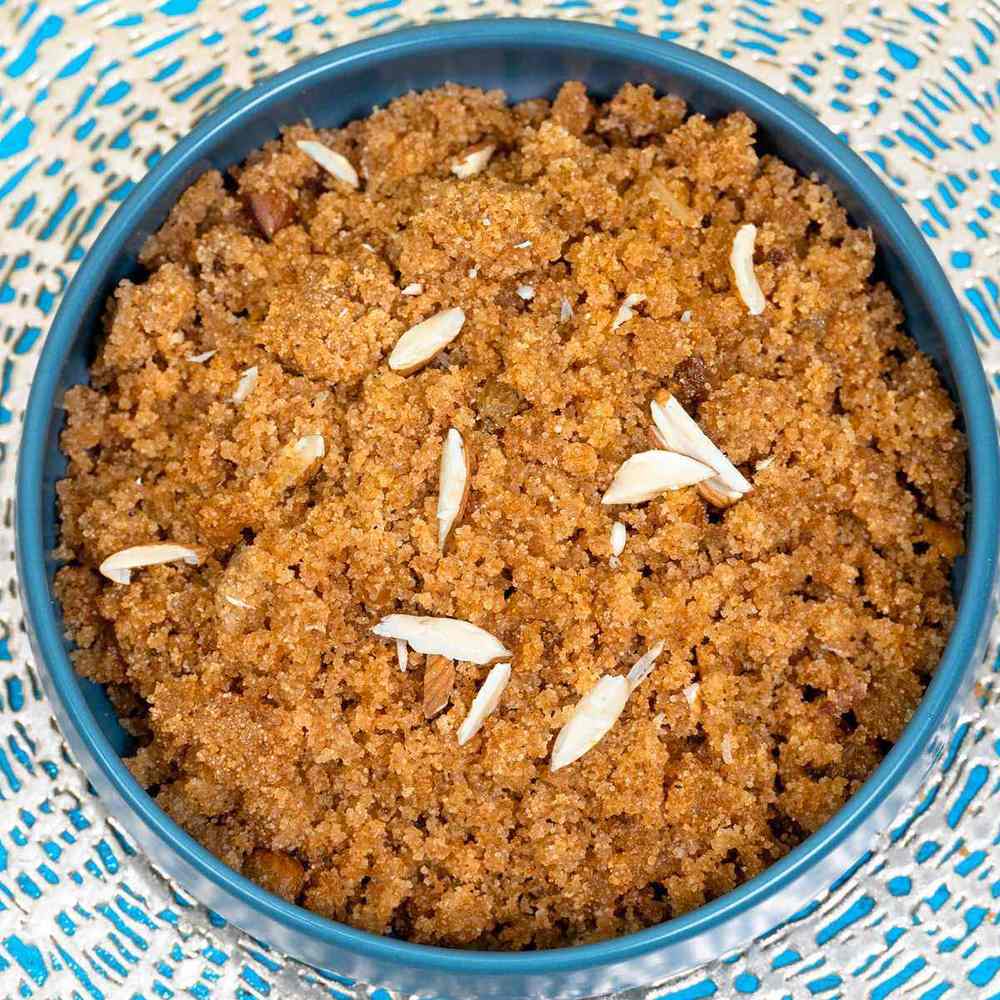
Recipe by Anna Riaz for RazEats · Cooked and filmed at home · Last updated
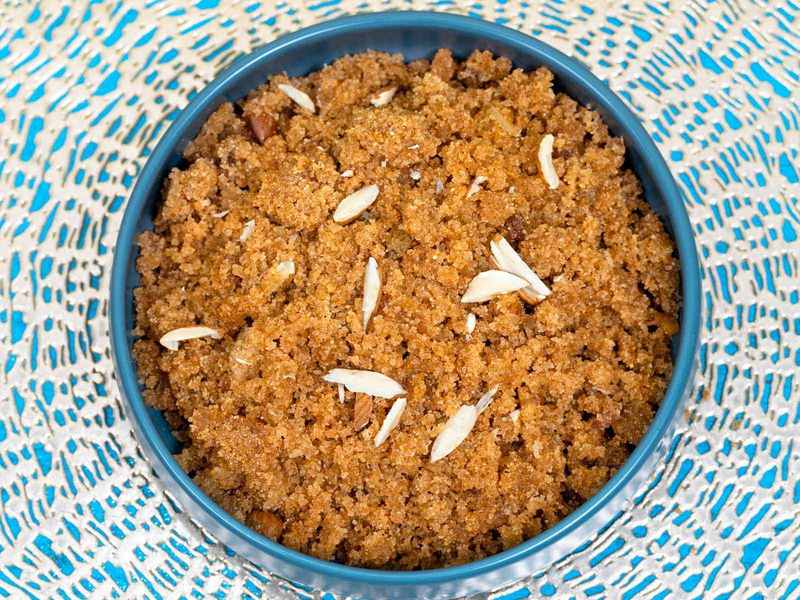 Watch the video · 1:25
Ingredients
- 160 g fine suji (semolina), about 1 cup
- 100 g desi ghee, about 1/2 cup
- 150 g sugar, about 3/4 cup
- 500 ml water, about 2 cups
- 1/2 tsp green cardamom powder
- 2 tbsp sliced almonds
- 1 tbsp sliced pistachios
- 2 tbsp raisins
- 1 pinch salt
Method
- Bring the water and sugar to a simmer in a small pot and keep it hot on low heat.
- Melt the ghee in a heavy pan over medium-low heat. Add the suji and stir constantly.
- Roast for 8 to 10 minutes until the suji turns light golden and smells nutty.
- Add the almonds and raisins and stir for 30 seconds.
- Pour in the hot sugar water slowly, standing back as it will spit. Stir quickly to avoid lumps.
- Add the cardamom and salt. Cook on low heat for 2 to 3 minutes until the halwa thickens and leaves the sides of the pan.
- Cover and rest for 2 minutes, then top with pistachios and serve hot.
Why this Suji Ka Halwa recipe works
Suji ka halwa is one of the most loved Pakistani desserts. Fine semolina is roasted in ghee until golden and nutty, then cooked in hot sugar syrup until it turns soft, glossy and fragrant with cardamom. It takes about 20 minutes from start to finish and uses ingredients most kitchens already have.
It is served warm at breakfast, after meals, on festive mornings and in the Ramzan and Eid season, often topped with sliced almonds and pistachios. The method is simple, but the details matter: how long you roast the suji, and whether the water is hot, decide whether you get a smooth, fluffy halwa or a lumpy, greasy one.
Tips for the best Suji Ka Halwa
- Roast the suji slowly on medium-low heat, stirring constantly. It is ready when it turns light golden and smells nutty, usually 8 to 10 minutes.
- Keep the sugar water hot in a separate pot. Adding hot liquid to roasted suji keeps it smooth and stops the ghee from separating.
- Pour the water in slowly and stir quickly. Stand back, because the mixture will splutter.
- Use a heavy-bottomed pan so the suji roasts evenly and does not catch.
- Add the cardamom near the end so its aroma stays fresh.
- Rest the halwa, covered, for 2 minutes before serving. It lets the grains finish absorbing the syrup.
Common mistakes to avoid
- Under-roasting the suji. The halwa will taste raw and floury. Roast until you can smell it.
- Adding cold water. This causes lumps and can make the ghee separate.
- Not stirring after adding the water. The suji clumps quickly, so keep stirring for the first minute.
- Using too little ghee. The suji needs enough ghee to roast properly and give the halwa its glossy finish.
- Overcooking at the end, which dries the halwa out. Stop when it thickens and leaves the sides of the pan.
Variations
- Adjust the sweetness. Start with a little less sugar and add more if you like it sweeter.
- Use milk. Replace part of the water with warm milk for a creamier halwa.
- Add saffron. Soak a few strands in a spoon of warm milk and stir it in with the syrup.
- Add fruit. Sliced banana or a little grated carrot can be cooked in with the suji for a fruity version.
- Change the nuts. Cashew nuts or chopped walnuts can replace the almonds and raisins.
How to store it
Suji ka halwa is best served warm and fresh. Cool leftovers completely, then keep them in an airtight container in the fridge for up to 3 days. To reheat, put it in a pan with a splash of water or milk over low heat and stir until it is soft again, or warm it in the microwave in short bursts.
Serving suggestions
- Serve warm in small bowls, topped with pistachios.
- Pair it with chana and puri for a classic Pakistani breakfast.
- Serve it as a quick dessert after dinner.
- Make it for Eid mornings, Ramzan iftar tables and family gatherings.
Suji Ka Halwa FAQ
Why did my halwa turn out lumpy?
Usually the water was cold, or it was poured in too fast without stirring. Use hot water, add it slowly and stir quickly.
How do I know the suji is roasted enough?
It turns light golden and smells nutty. This takes about 8 to 10 minutes on medium-low heat with constant stirring.
Can I make suji ka halwa with less ghee?
You can reduce it a little, but ghee is what roasts the suji and gives the halwa its taste and shine. Too little ghee leaves it dry and pasty.
Can I use coarse semolina?
This recipe uses fine suji. Coarse semolina takes longer to cook and gives a grainier halwa, so you may need a little more water and cooking time.
How long does it keep?
Up to 3 days in the fridge. Reheat it with a splash of water or milk.
Want another take? See our semolina dessert version of suji ka halwa.
Same dish, other video
- Suji Ka Halwa (second video): A second video of the same dish, with saffron as an option.
Other versions of this recipe
This page is the classic version, roasted in ghee with almonds, raisins and pistachios. Looking for a different version?
- Halwa with Semolina: a soft, fluffy version with optional saffron.
More from Desserts and Sweets
More Dessert and Sweet recipes · All recipes · Blog · Read it in the flip-book ebook